

One Customer, Every Channel: Omnichannel Loyalty
 By the Kemicard team
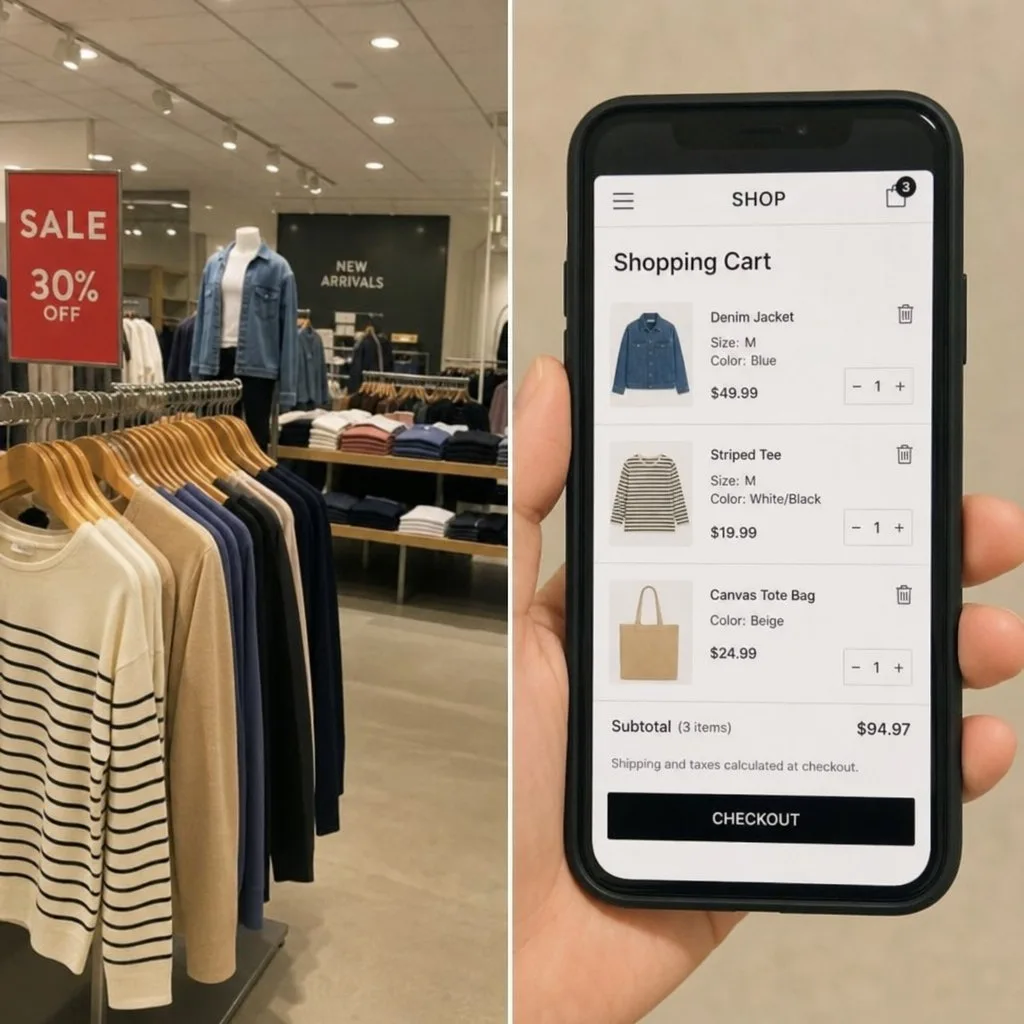
Most loyalty programmes are two programmes wearing one logo. There is an online account and an in-store card, they do not know about each other, and the customer notices long before the business does.
The symptom customers actually see
Someone buys online for a year, walks into the shop, and is treated as a stranger. Or they earn points in store and cannot spend them at checkout online. Neither is a technology limitation any more; both are the visible edge of two systems that were never joined.
The cost is not just irritation. It is that the business genuinely does not know its best customers, because each system holds half of each of them.
Multichannel and omnichannel are not the same word
Multichannel means selling in several places — a shop, a website, a marketplace, a wholesale account. Most businesses already do this.
Omnichannel means those channels share one view of the customer. The difference is not how many places you sell; it is whether the customer is one record or several.
Almost every business is multichannel. Considerably fewer are omnichannel, and the gap is where loyalty programmes go wrong.

The wallet pass as the joining pin
A wallet pass is useful here for an unglamorous reason: it is one credential that works in both worlds. Scanned at a till, referenced online, tied to one record.
- In store, the pass is scanned and the purchase attaches to the customer.
- Online, the same record is the account, so the balance is the same balance.
- On the phone, the pass carries the current balance and tier without anyone logging in.
- Everywhere, there is one identity, so segmentation reflects the whole customer rather than one channel's slice of them.
What becomes possible once identity is unified
The unglamorous work of joining records is what makes the interesting things achievable.
- Personalisation with something behind it. A recommendation based on everything someone bought, not what they bought on one channel.
- Buy online, collect in store that recognises the person at the counter.
- Attribution that is not a guess. A geofenced offer that produced an in-store visit is measurable when the visit attaches to the same record.
- Lifetime value as a real number rather than a channel-specific estimate.
The order of work
Teams usually attempt this in the wrong sequence — buying a personalisation tool before they have a single customer record for it to personalise against.
- Unify identity first. One record per customer, however unglamorous the deduplication work is.
- Give the customer one credential that works in every channel.
- Make every channel write back to that record — purchases, visits, redemptions.
- Then personalise, once there is something worth personalising on.
Where the record lives
If your customers are Salesforce records, that is already the single view — the work is making the in-store credential point at it. Kemicard issues the pass from the contact record, so a scan at the till writes to the same object as the online order. See loyalty programmes and retail and eCommerce.
FAQ
- Do we need to replace our POS? Usually not. It needs to scan a code and write the result somewhere your CRM can see.
- What about customers who never identify themselves in store? Some never will. The programme should still work; you simply know less about them.
- Is one identity a privacy risk? It is a privacy responsibility. Collect what you use, say what you collect, and let people opt out of messaging from the pass.
Explore Kemicard
Product & solutions
Give Every Channel the Same Customer
Book a demo, test drive Kemicard, or start a free 30-day trial.
 Start Free Trial