

Apple Wallet and Google Wallet Permits, Citizen Passes, and Library Cards, Issued From Salesforce
Kemicard connects to Salesforce Public Sector Solutions and Gov Cloud to issue every citizen-facing pass from the agency record already in Salesforce. No separate app, no third-party pass platform, no custom development required.
What public bodies use Kemicard for
Permits & licenses
Digital permits generated from your permit object, with expiry dates, renewal-reminder pushes, and instant reissue on approval.
Citizen ID passes
Program IDs — parks, transit, community services — with QR verification at any checkpoint and scan events logged for audit.
Staff credentials
Employee and contractor badges issued from HR records, revoked from the same record the day access ends.
Civic Messages Citizens Don't Miss
Letters get lost and portals go unvisited. A permit or license in the wallet gives agencies a direct, measurable channel for the notices that matter.
- Renewal compliance. Expiry reminders at 30 and 7 days cut lapsed permits — and the enforcement caseload that follows.
- Status decisions. Approvals, amendments, and inspection results push the moment the record updates.
- Obligation reminders. Court dates, filing deadlines, and appointment confirmations reach the holder's lock screen.
- Public notices. Targeted advisories go only to affected credential holders — not the whole mailing list.
Every message here is a template — sent automatically from a Salesforce Flow, a scheduled Kemicard Connect send, or a single record, at no per-message cost.

100 Civic Plaza, 2nd Floor
Fairview, IL 62208
The Back of the Permit: Conditions in Plain Sight
Permit conditions, office contacts, and renewal steps travel with the credential — for the holder and any inspector who checks it.
Every row is a back-of-pass field configured in Kemicard Studio — plain text, tappable links, and phone numbers, all mapped to Salesforce data. Amend a condition and the permit back reflects it immediately — holders and enforcement always read the same version.
Compliance-Ready by Architecture
- Data residency in your org — pass data lives on Salesforce records under your existing government cloud controls.
- Full audit trail — issuance, updates, scans, and revocations timestamped as Salesforce records.
- Revocation patterns — expire, disable the link, or switch to an invalid-state design that hides the barcode.
- Procurement via Carahsoft — Kemicard's public-sector distribution partner.
- Accessibility-minded delivery — passes work on the phones citizens already have, with no account creation.
 City of Riverton
 Cedar Valley Transit
Public sector, in practice
Permits, licenses, and credentials are documents citizens must carry and agencies must verify — a combination wallet passes were built for. A Kemicard pass issued from a Salesforce record is signed, uniquely identified, and updates the moment the underlying status changes: renewed, suspended, amended, or revoked. The version in the citizen's wallet is always the current one, which paper can never promise.
Field verification needs no special hardware: an inspector opens the Kemicard Scanner in a browser, scans the QR code, and sees live validity from Salesforce — including flags for expired or duplicated credentials — with every scan logged for audit. For recurring obligations, push notifications remind holders before expiry, and renewal links route straight back to your existing portal or payment flow, cutting the lapsed-renewal caseload.
Kemicard deploys inside your agency's Salesforce org, so data residency, FOIA readiness, and records retention follow the controls you already operate — no citizen data in a third-party pass database. US agencies can procure through Carahsoft, and the platform's security model (scoped OAuth, stateless pass server, Salesforce security review) is documented for your assessment team in the Trust Center.
A Credential Is Only As Good As Its Expiry
Public-sector credentials fail in a predictable way: they are issued correctly and then outlive their entitlement. A permit that expired in March still looks valid in June, because card stock does not know what date it is.
- Validity is a field, not an assumption. The pass reflects the record, so an expired permit is visibly expired.
- Revocation does not depend on collection. Recovering a physical credential from someone whose entitlement has ended is a policy that fails routinely.
- Verification beats inspection. A scan checked against a live record distinguishes a valid credential from a photograph of one; looking at it does not.
- Renewal reaches the holder before the lapse rather than after the enforcement action.
More in digital ID cards.
What Agencies Ask of a Digital Permitting Solution
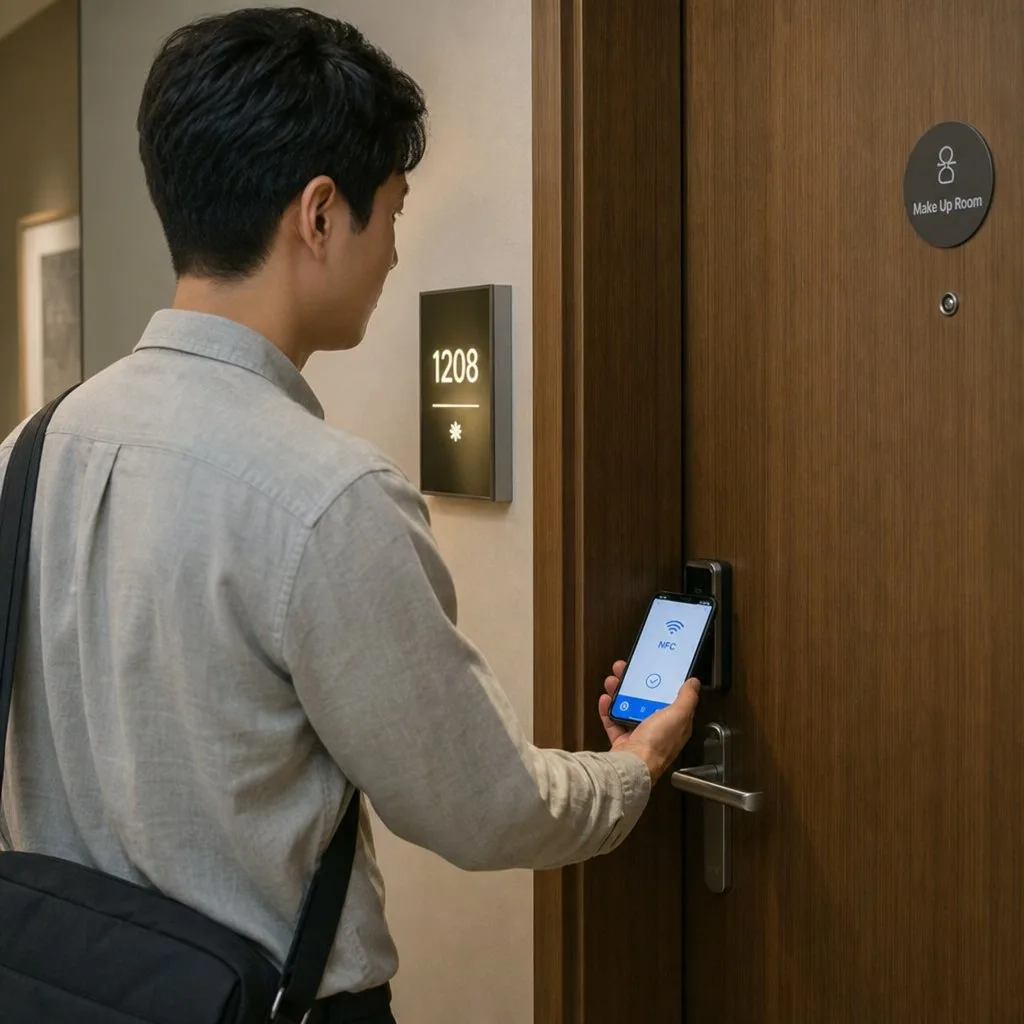
Evaluations of secure digital permit software for government agencies tend to turn on four questions, and they are rarely the ones on the feature list.
Where does the data live? Kemicard is a Salesforce-native application, so permit and licence records stay inside the org you already hold, under the controls and residency arrangements you already operate. No citizen record is copied to a vendor platform in order to render a credential.
Can a credential be revoked immediately? Yes — a status change on the record expires or withdraws the pass without anyone recovering a physical document, which is the failure mode of every paper permit scheme.
Can an officer verify it in the field? A scan validates against the live record rather than inspecting a printed artefact, so an expired or revoked permit fails the check rather than merely looking plausible.
What happens to residents without smartphones? Keep issuing paper for them. The barcode is shared, so a single verification process covers both, and no resident is excluded by the technology choice.
One Salesforce Platform Covers Every Pass Type a Government Agency Needs to Issue to Citizens
Government agencies running multiple departments on Salesforce configure each pass type once. Kemicard reads the record, applies the right template, and issues the pass to the citizen without manual work or duplicate data entry across departments.
Citizen ID Pass
Issued from a Salesforce contact record for residents accessing government services. Carries name, citizen ID number, and service eligibility without a visit to an agency office.
City Permit Pass
Generated from a Salesforce permit record for parking, construction, or event permits. Displays permit number, valid dates, and approved location pulled live from the agency record.
Resident Services Card
Issued to residents enrolled in city programs from a Salesforce contact record. Carries program type, eligibility status, and renewal date without a physical card or separate portal.
Public Transit Pass
Connected to a Salesforce ridership or subsidy record. Displays pass validity, route access, and remaining balance updated automatically when the agency record changes.
Salesforce Gov Cloud Issues and Maintains Every Citizen Pass Through Approval, Renewal, and Closure Automatically
Government agencies configure each pass lifecycle once in Salesforce Gov Cloud. Kemicard handles issuance on approval, updates on record change, and automatic revocation on closure across every pass type and department from a single platform.
- Issued on Record Approval. Kemicard issues the citizen pass the moment a Salesforce Gov Cloud record moves to an approved status. No manual trigger or separate issuance step required from the agency team.
- Status Changes Update the Pass Instantly. When a citizen's eligibility, permit condition, or service status changes in Salesforce, Kemicard updates the pass in the citizen's wallet immediately without reissuing a new pass.
- Renewal Reminder Sent Before Expiry. Kemicard triggers a lock screen notification on the citizen's pass as the expiry date approaches, prompting renewal before the pass lapses without a separate outreach campaign.
- Lifecycle Events Logged to Salesforce Record. Every pass action, including issuance, update, renewal, and revocation, writes back to the Salesforce Gov Cloud record, giving the agency a complete audit trail of pass activity per citizen.
One Salesforce Citizen Pass Recognised Across Every Government Department and Service Point
Government agencies share one citizen identity across Salesforce departments without duplicating records or issuing multiple passes. Each department scans the same pass QR and checks eligibility against their own Salesforce data independently.
No Duplicate Citizen Records Required
Departments share one Salesforce citizen identity without duplicating contact records. Each service point reads only the fields relevant to its own validation.
Scan Log Written to Each Department's Salesforce Record
Every scan writes back to that department's own Salesforce record separately, giving each agency an independent audit trail.
Temporary Access Granted to an Existing Pass
Departments grant time-limited access directly to a citizen's existing pass in Salesforce without creating a new record or issuing a separate credential.
One Configuration Covers the Entire Organisation
Government IT configures pass templates and department permissions once in Salesforce. Every new service point inherits the existing setup automatically.
Frequently Asked Questions
Kemicard is compatible with Salesforce Gov Cloud and Salesforce Public Sector Solutions, as well as standard Salesforce editions. Government agencies on Gov Cloud configure and issue citizen passes from within their existing environment without moving data outside it.
Kemicard generates an Add to Wallet link delivered by email or SMS from Salesforce. The citizen taps the link and adds the pass to their phone's wallet app in one step. No account creation, portal login, or visit to an agency office is required.
Yes. Kemicard issues an Apple Wallet pass for iPhone users, and a Google Wallet pass for Android users from the same Salesforce record. Both pass types carry identical information and update from the same data source.
Kemicard works with standard Salesforce objects including Contact, Case, and Campaign records, as well as custom objects built for permit management, library membership, or public benefit programs. No new data model is required.
Yes. Kemicard can process bulk issuance from Salesforce list views or batch jobs, issuing passes to hundreds or thousands of citizens simultaneously. Each pass is personalized from the individual citizen's Salesforce record.
The pass displays in the citizen's wallet app without an internet connection. Staff scanning the pass QR validate against Salesforce in real time, but the citizen does not need to be online for the pass to be presented.
Citizen passes issued through Kemicard display in the native Apple Wallet and Google Wallet apps, which meet platform-level accessibility standards including screen reader support and high-contrast display on both iOS and Android.
Yes. Kemicard writes pass delivery status and Add to Wallet confirmation back to the Salesforce citizen record, giving agency teams visibility into which citizens have activated their digital citizen pass without a separate reporting tool.
Kemicard installs directly from the Salesforce AppExchange and connects to existing agency records without a custom integration project. Most government teams configure their first pass template and issue their first live citizen pass within the same week as installation.
No. Kemicard reads field values from the Salesforce record at the point of pass generation and does not store citizen data in a separate system. Pass updates pull from the live Salesforce record each time a change occurs.
Sources: Apple's Wallet Passes documentation, Building a Pass and Adding a Web Service to Update Passes; Google's Google Wallet API documentation.
See Every Citizen Pass Type Your Agency Issues Running From One Salesforce Platform Book a demo and see library cards, city permits, and resident credentials all issued from live Salesforce records in a single session.
 Get It on AppExchange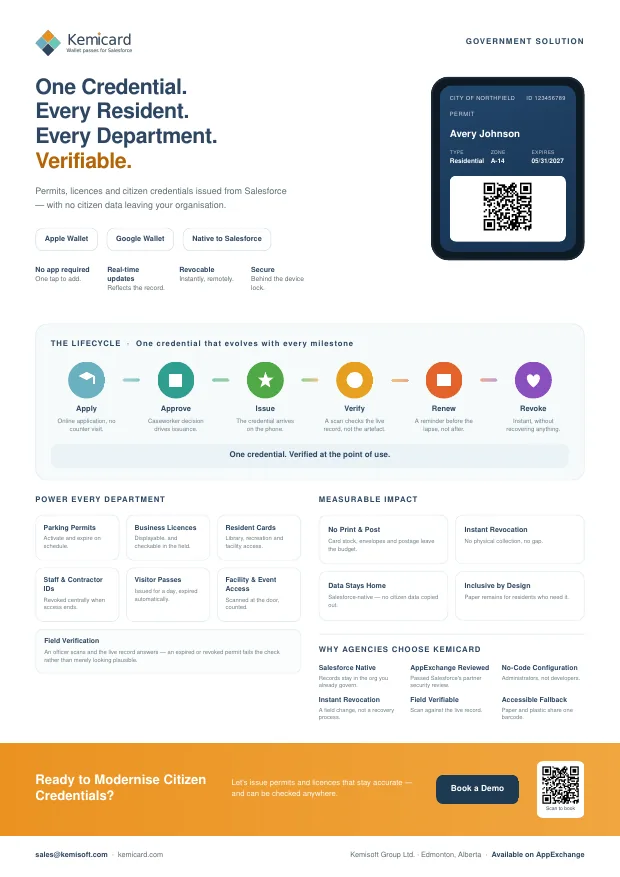
Government — the brochure
A one-page summary for a conference table or an email, or the six-page version for the colleague who has to approve it. Both cover what you can issue, how it works, and the push and back-of-card examples for government.
Further reading
From the blog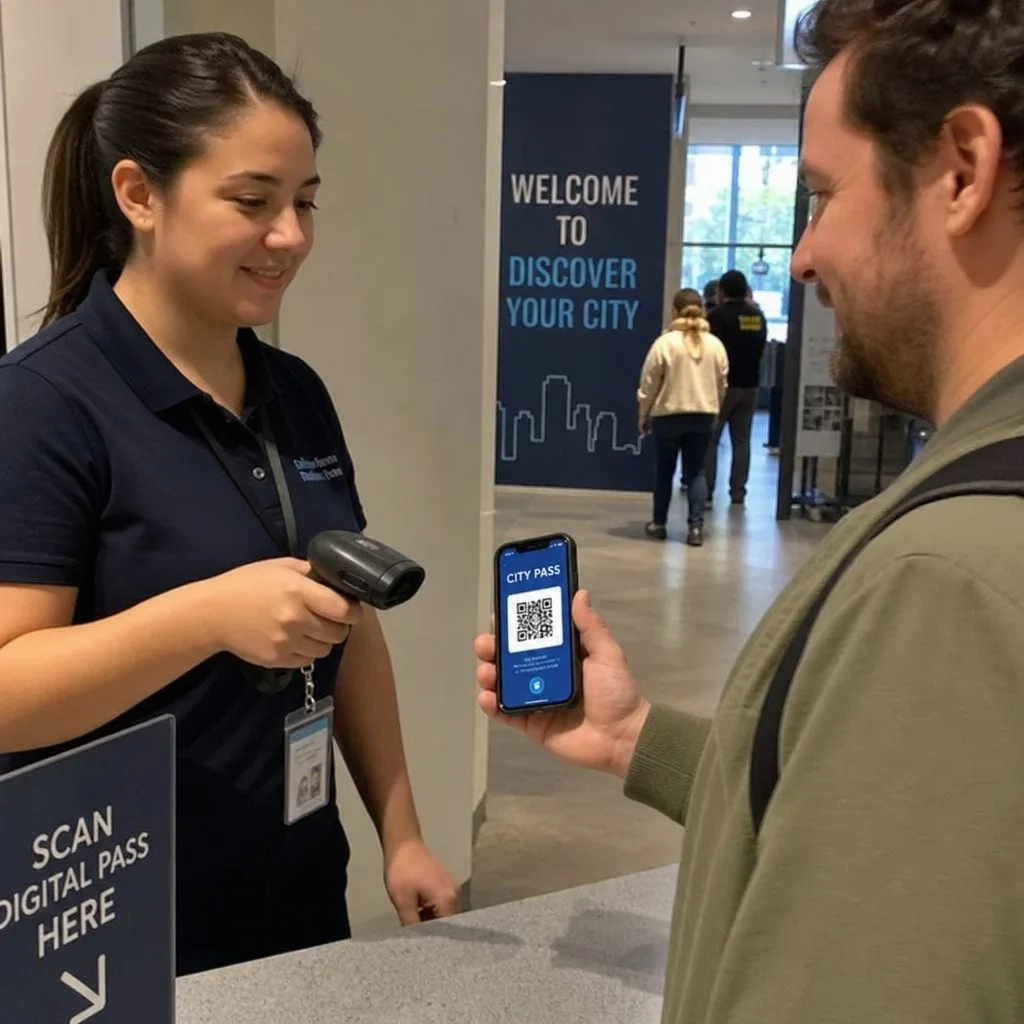

Modernize Citizen Credentials
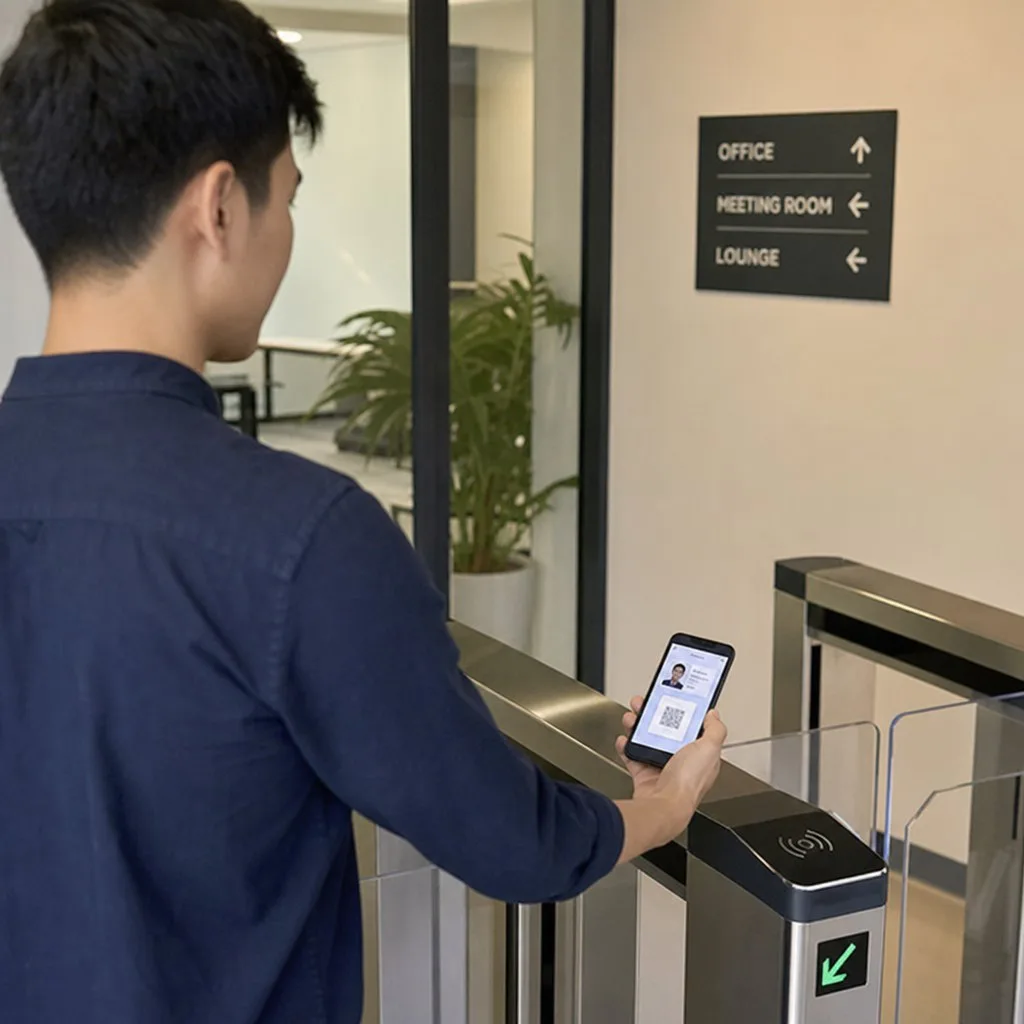
See permit issuance, checkpoint verification, and revocation end to end.