

Salesforce Insurance ID Cards in Apple Wallet and Google Wallet the Day a Policy Goes Live
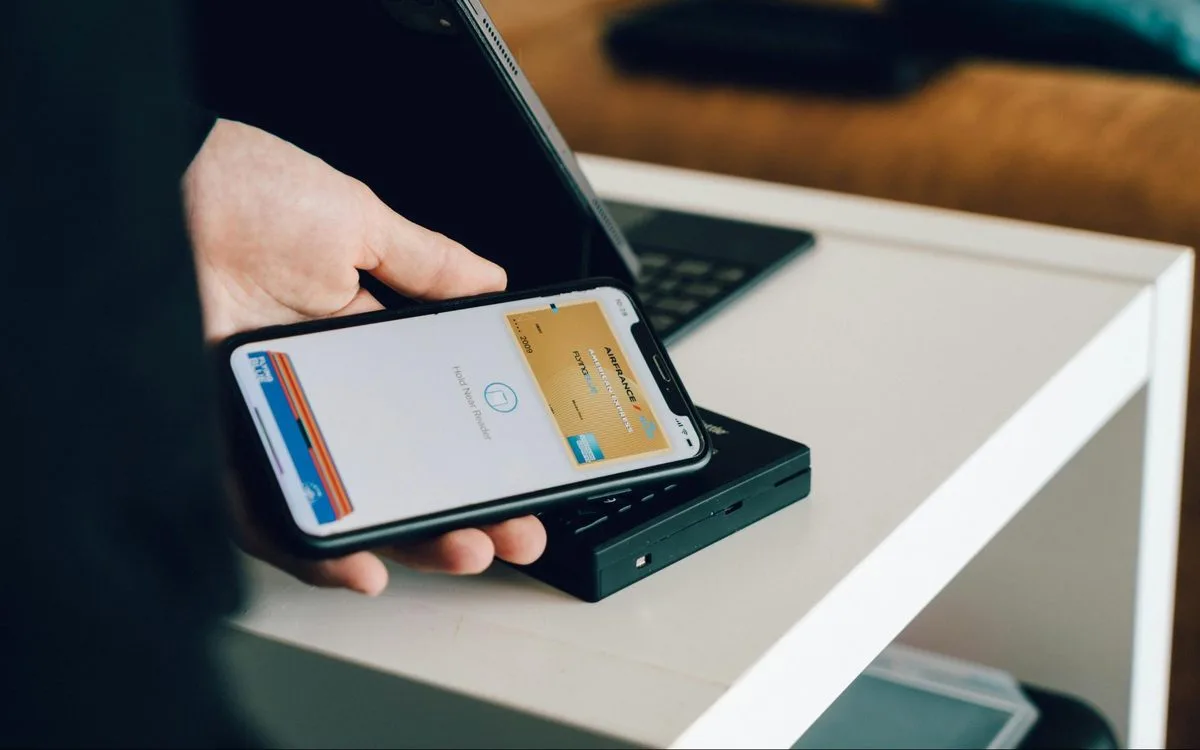
Kemicard builds the pass from fields on the policy record and sends the member a link. One tap adds the insurance card to Apple Wallet or Google Wallet.
 Try on AppExchange
What insurers and brokers use Kemicard for
Member ID cards
Health, dental and vision cards carrying the member number, group number and plan tier — the details a provider's front desk asks for, on the device the member has with them.
Policy & claims contacts
Policy number, effective dates, the 24-hour claims line and the adjuster's direct number on the back of the pass. Findable at the roadside, not buried in an email.
Broker cards
A firm-issued digital card per producer, with the licence details and booking link, replacing the paper card that goes stale the moment someone changes desk.
The Card in the Wallet Is Usually Last Year's
Insurance is the clearest case of a credential that goes out of date on a schedule. Cards are printed and posted at renewal, the new one arrives, the old one stays in the wallet, and at the point of service somebody presents the wrong one. The provider calls to verify, the member waits, and a piece of administration is created that nobody wanted.
A pass issued from the policy record does not have a stale version. At renewal the same pass updates — new effective dates, new plan tier if it changed, same place on the phone. Nothing is posted and nothing needs to be thrown away.
- Mid-term changes reach the member. A dependant added, a plan upgraded, an address changed — reflected the same day.
- Lapses are handled honestly. A cancelled policy revokes the pass rather than leaving a plausible-looking card in circulation.
- Replacement is instantaneous. A lost card today means a call and a wait for post. A lost pass means resending a link.
- Print costs fall. Card stock, envelopes and postage across a whole book of business is a line item worth examining.


What a Wallet Pass Is, and What It Is Not
A wallet pass is a credential your organisation issues and controls. It is not a regulated identity document, and treating it as one causes problems.
On proof of motor insurance: whether an electronic card is accepted at the roadside or at a vehicle registration office depends entirely on the jurisdiction, and the rules differ between and within countries. Many places accept it; some still require paper. Check your regulator's position before telling policyholders they can leave the paper card at home — and where the answer is mixed, issue both.
On health information: the pass should carry the identifiers a provider needs to look you up, not clinical detail. Member number, group number, plan and effective dates are appropriate. Diagnosis and treatment history are not, and never need to leave your system of record for the card to do its job.
Handled that way, the pass is genuinely useful and raises no question it cannot answer.
Insurance Is Remembered on the Worst Day
Most policyholders interact with an insurer twice: when they buy and when something goes wrong. The second occasion is the one that determines whether they renew, and it usually begins with someone trying to find a phone number while stressed.
- The claims line is one swipe away. On the back of a pass the member already carries, not in an email from eighteen months ago.
- It works with no signal. A pass is stored on the device. A portal login at the roadside is not a plan.
- Claim status can push. Received, assessed, settled — the updates people currently chase by phone.
- The adjuster is named. A direct number on the pass removes a call to the switchboard.
Group benefits works the same way at a different scale: one template, a pass per member, and open-enrolment reminders that reach the employees who have not acted rather than everyone.
Claims Centre, PO Box 4120
Edmonton, AB T5J 2P4
The Back of the Card: The Number You Need on the Worst Day
The 24-hour claims line, the named adviser, the portal and the policy dates — one swipe from the lock screen, working with no signal.
This is the row that justifies the whole programme. A member at the roadside is not going to search an inbox from eighteen months ago for a phone number.
Insurance, in practice
Insurance already runs on Salesforce in a great many carriers, brokerages and benefits administrators — policies, members, claims and producers as records, with Financial Services Cloud or a custom data model underneath. Kemicard issues from those records rather than from an export of them, which is the entire reason a pass can stay accurate through a renewal cycle without anyone running a print job.
The commercial argument is usually made on print and postage, because that number is easy to produce and often larger than people expect once envelopes, returned mail and replacement requests are included. The better argument is the service one. Every call to a contact centre that begins "I've lost my card" or "which number do I ring" is a cost, and both are avoidable by putting the answer somewhere the member cannot mislay it.
Brokers and agencies get a different benefit from the same platform. A producer's digital card carries their licence details and stays accurate when they move desks or change appointment, and scans at industry events attribute back to the record — the same pattern law firms use for conference attribution.
One caution worth repeating: this is a credential, not a policy document. It carries the identifiers and the contacts. The policy wording, the schedule and the certificate remain where they are, and the pass should link to them rather than try to replace them. Read security and compliance for how the data is handled, and how it works for the issuance model.
Health, Auto, Home, and Life Policies All Produce the Same Salesforce Digital Wallet Insurance Card
Kemicard reads whatever object holds the policy, standard or custom. A carrier on a custom policy object and one on Financial Services Cloud are configured the same way.
Health Plan Member ID Cards
Member ID, group number, network tier, and copay levels render from the member record. Everyone dependent on the plan carries an Apple Wallet health insurance card of their own.
Auto Policy ID Cards
Vehicle, VIN, policy number, and coverage dates come off the auto policy record. Adding a car mid-term updates the card already in the wallet.
Home and Property Passes
Property address, policy number, coverage period, and the claims number on one pass. Renewal moves the dates without a reissue.
Life Policy Passes
Policy number, coverage amount, effective date, and the servicing agent's contact stay on the card for the life of the policy. Agent reassignment updates it centrally.
Salesforce Member ID Cards Stay Accurate Through Every Endorsement and Renewal
The pass carries no stored copy of the policy details. Fields render from the member record at delivery and re-render on update, so an edit in Salesforce is an edit on the card.
- Endorsement Rewrites the Card in Place. A mid-term coverage change saves on the policy record and rewrites the pass already in the wallet. The member ID stays the same, so nothing has to be re-added.
- Renewal Extends the Same Pass. A renewed term moves the coverage dates forward on the existing card. No second Add to Wallet link, no duplicate card sitting in the wallet.
- Dependent Cards Track the Parent Policy. Adding a dependent issues that person a card of their own off the same policy. Removing one revokes only that card and leaves the rest of the family untouched.
- Update Triggers Configured per Template. Which field changes push an update is set on the template. Administrative edits can save quietly while coverage-affecting changes go out immediately.
- Apple Wallet and Google Wallet Move Together. One field change updates both versions of the card at once. A household on mixed devices reads the same coverage at the same time.
Broker Cards Carrying Agency Branding on the Carrier's Own Salesforce Template
One template serves the whole channel. Logo, brand colors, agency contact, and office address render from the agency record, so a hundred appointed agencies do not mean a hundred templates.
Branding Fields on the Agency Record
Logo, brand colors, office address, and producer photo render from fields on the agency and producer records. The carrier template controls layout, so the artwork stays inside brand rules.
Compliance Zones Locked on the Template
License number, appointed lines, and carrier disclosure text render from carrier-controlled fields. Agencies fill the branding slots and nothing else.
Revoked at Termination or License Lapse
Ending the appointment invalidates the card. A lapsed license does the same, so an unlicensed producer stops carrying a live carrier credential.
Producer Contact the Client Can Tap
Phone, email, agency site, and quote link render on the card so a client reaches the producer directly from the pass.
Channel Reporting on the Agency Record
Cards issued and scans logged roll up to the agency, so channel teams see producer activity in the same reports as policy data.
Every Scan of the Apple Wallet or Google Wallet Insurance Card Checks Coverage in Salesforce
Each scan writes an event against the policy. Service and claims teams see where a card was presented and when, in the same reports that hold the policy data.
- Status Checked at Scan Time. The code resolves against the live policy, so the answer reflects the record as it stands at that second. A change saved an hour earlier is already reflected.
- Validation Rules Set per Template. Which policy statuses are read as valid is configured on the template. A grace-period policy can pass while a cancelled one fails, according to carrier rules rather than a fixed setting.
- The Fields the Scan Returns. Plan name, group number, effective dates, and member status render in the validation view. The person at the desk sees what the carrier sees, without a support call.
- Scan Reporting by Location and Period. Scan volume by plan, by site, and by month reports through standard Salesforce dashboards. Card activity and policy data share the same objects.
Frequently Asked Questions
No. The card is delivered as a link by email or SMS, and one tap stores it in the wallet already installed on the phone. Carriers that run their own member app can keep it and link out to the pass, so there is no Salesforce insurance ID card app to build alongside it.
Kemicard reads any Salesforce object, standard or custom. Policies on Financial Services Cloud, on a custom policy object, or on records synced from a policy administration system all map the same way, so nothing has to be restructured before passes can issue.
Only the fields mapped on the template. Member ID, group number, plan name, and the pharmacy identifiers are common choices, and anything sensitive can be left off the pass entirely while staying on the record in Salesforce.
A Salesforce mobile membership card is delivered by an Add to Wallet link. That link can go out by email, by SMS, inside a welcome letter as a QR code, or from a member portal, and it can be resent from the record at any time.
Pass holders never need a Salesforce license. The producer receives the same kind of link a policyholder does, and the appointment record inside the org is what governs whether the card stays valid.
The same link re-adds the card to the new device, and the record does not need a reissue. Cards on the old device stop reflecting the policy once it is removed from that wallet.
Requirements vary by line and by jurisdiction, and the card is designed to carry whatever fields a regulator expects on the face of the pass. Confirm the rules for each state or province the carrier writes in before retiring printed cards entirely.
Yes. Cards are generated in bulk from the member list on the group, and each employee receives an individual pass tied to their own record. Later joiners are issued on the same conditions as everyone else.
Passes are generated from Salesforce data inside a SOC 2 Type II environment, and the carrier's records stay the source of truth throughout. Details of the security review are available for procurement teams.
Stop Running a Card Process per Line of Business. Start Running One in Salesforce. Health, auto, home, and life cards from one package, one admin, and one annual card volume. Broker cards included in the same org.
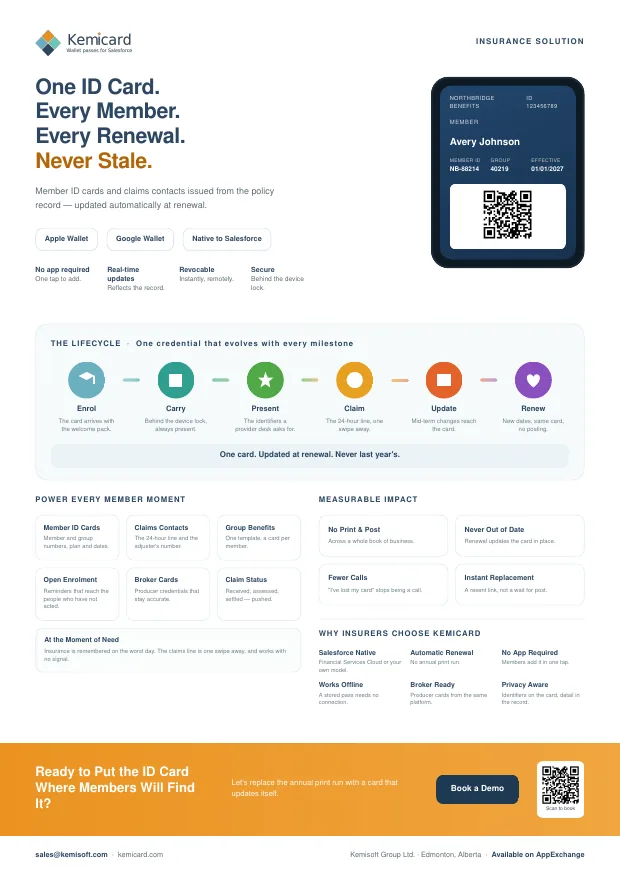
Insurance — the brochure
A one-page summary for a conference table or an email, or the six-page version for the colleague who has to approve it. Both cover what you can issue, how it works, and the push and back-of-card examples for insurance.
Further reading
From the blog
Put the ID Card Where the Member Will Find It
See policyholder cards and renewal updates on your own Salesforce data model.