

QR Loyalty for Small Businesses: A Realistic Guide
 By the Kemicard team
The paper stamp card works. That is worth saying plainly, because most arguments for digitising it start by pretending otherwise. It works, it costs almost nothing, and customers understand it instantly. The case for replacing it rests on the three things it cannot do — and if none of those matter to you, keep the stamps.
What the paper card genuinely cannot do
- Tell you who your regular customers are. A completed card is a free coffee and no information. You never learn who came back, how often, or who stopped.
- Reach anyone. There is no way to tell a lapsed regular that you have missed them, because you do not know who they are.
- Survive a wallet clear-out. Cards are lost constantly, and a lost card usually ends the relationship silently.
It also cannot stop the customer who buys a stamp for a friend, though in a small business that is rarely worth solving.
The version that actually gets adopted
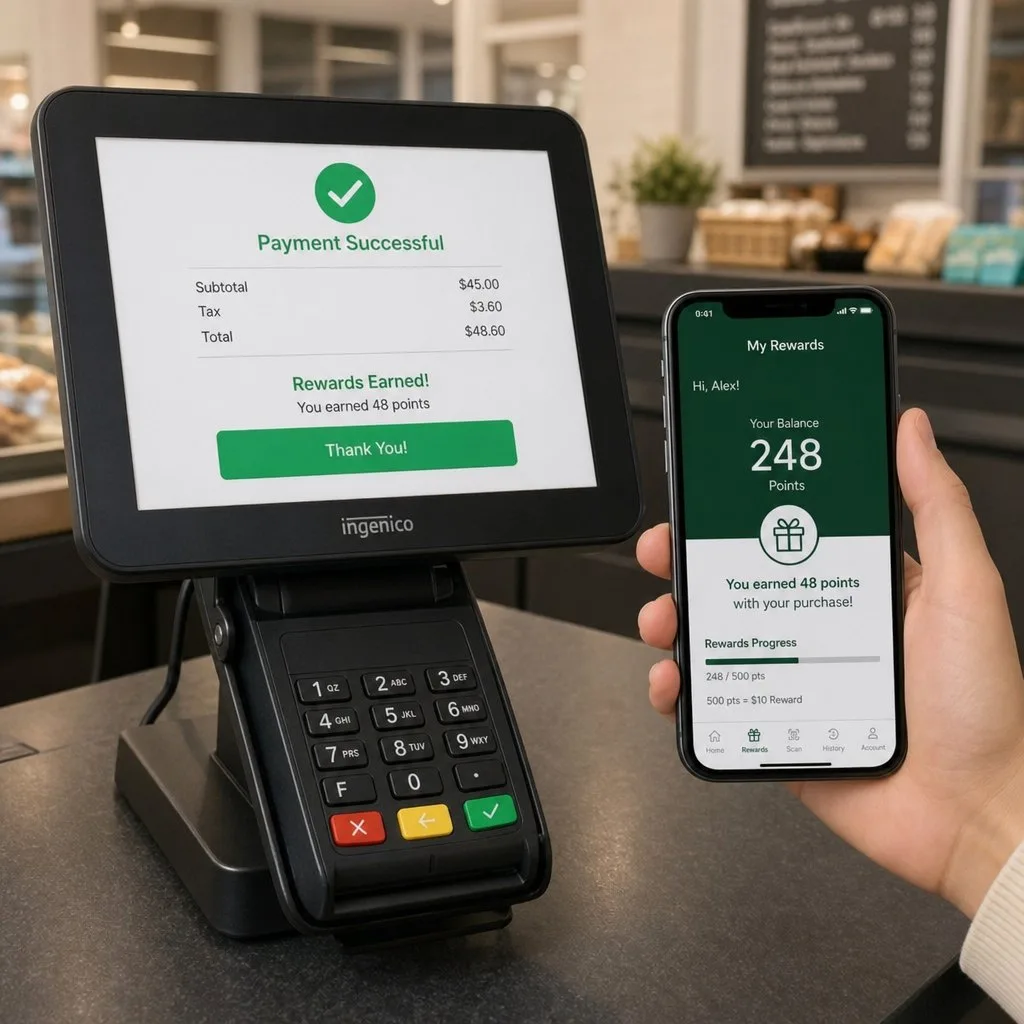
Most small-business loyalty schemes fail at the join step rather than the reward step. A programme requiring an app download loses the majority of customers at the counter, because nobody installs software while a queue forms behind them.
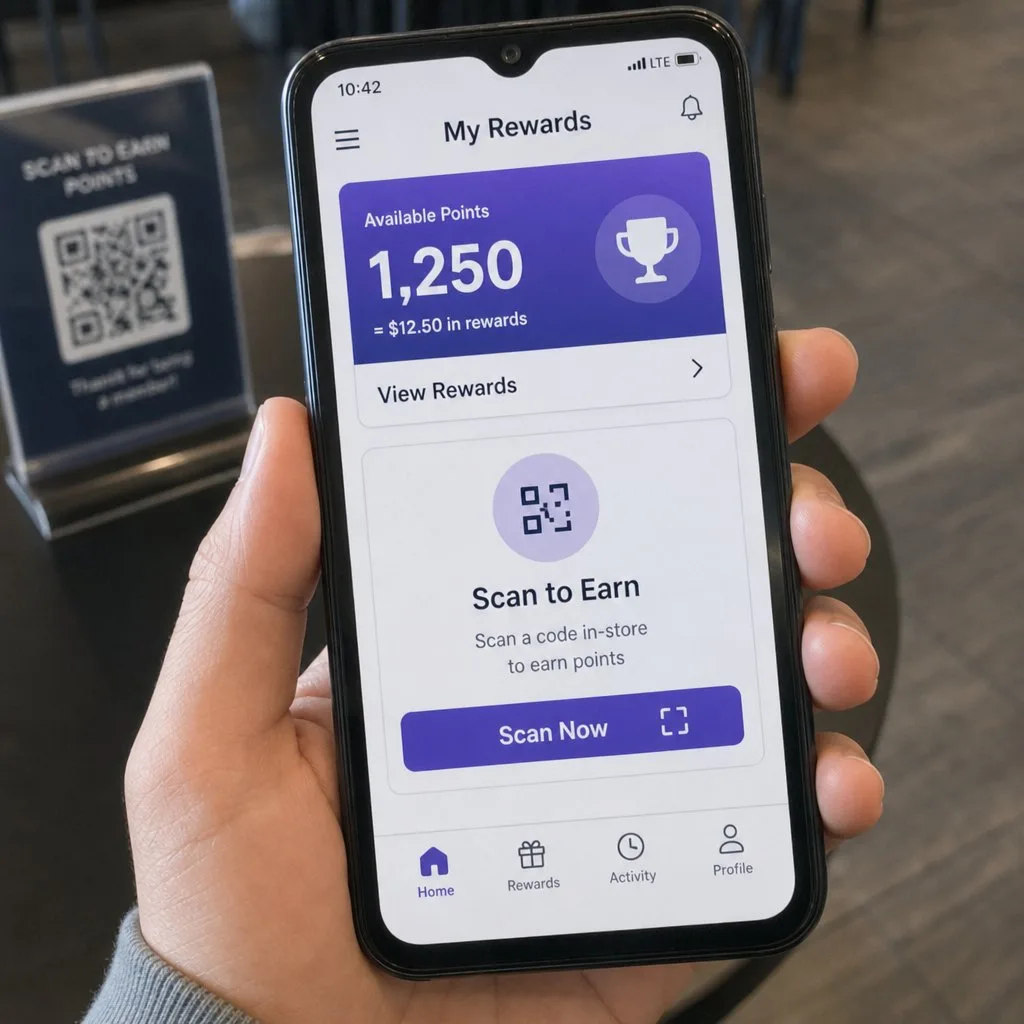
The version that works is a QR code on the counter that adds a pass to Apple Wallet or Google Wallet in about ten seconds, with no account to create and nothing to install. That constraint is the whole design.
Setting one up
- Decide the reward before anything else. Buy nine, get the tenth. Spend £200, get £20. Keep it explainable in one sentence — a scheme that needs a paragraph will not be understood at a counter.
- Design the card to look like your shop. Logo, your colours, the balance visible on the front. It will sit in a wallet next to airline and bank cards; it should not look worse than they do.
- Put the QR code where the transaction happens. At the till, on the receipt, on the table. Not on a poster by the door that nobody stops at.
- Work out how staff will add a point. Scanning the customer's pass is the reliable way. Whatever you choose, it has to take under five seconds or it will quietly stop happening on a busy Saturday.
- Say something after they join. A welcome message, then a reason to return. Silence for six weeks and the pass becomes invisible.
Push notifications: the actual asset
The points are the visible part. The channel is the valuable part.
A wallet pass gives a small business something it usually cannot buy: the ability to put a short message on a customer's lock screen without paying for reach, without an algorithm deciding who sees it, and without an email that lands in Promotions.
That privilege is finite. A message a week is a business people mute. A message when there is genuinely something worth knowing — a quiet Tuesday, a new menu, two stamps from a reward — keeps working for years. Restraint here is not politeness; it is the difference between a channel and an uninstall.
What to measure, and what to ignore
Sign-up numbers feel like progress and mean very little. Three figures are worth watching:
- Repeat rate — what share of joiners came back at all. If this is low, the reward is too distant.
- Visits between joining and first reward — how long the scheme asks people to wait. Shorten it if most never arrive.
- Lapse rate — members with no activity in sixty days. This is your re-engagement list, and it is the number the paper card could never give you.
Honest limitations
A digital scheme needs someone to run it. Somebody has to decide what to send, notice when the numbers drift and keep the staff process alive. In a very small business that person is the owner, and the time cost is real.
Adoption is also never total. Some customers will not scan anything, and a paper card alongside is a reasonable answer rather than a failure.
When it belongs in your CRM
If you already run Salesforce, the loyalty card should render from the contact record rather than sit in a separate loyalty app — so a member is one record with purchases, visits and messages attached, not two records to reconcile. See loyalty programmes, how digital loyalty cards work and points and reward systems.
FAQ
- Do customers need an app? No, and they should not. Apple Wallet and Google Wallet are already on the phone.
- Can someone screenshot the card? They can, which is why points should be held against the record rather than on the image.
- What if we already use a POS loyalty feature? Then start there. A wallet pass adds the lock-screen channel a POS scheme usually lacks.
- How many members before it is worth it? Less about the count than the frequency — the maths works when customers visit often enough for a reward to feel reachable.
Explore Kemicard
Product & solutions
Run Loyalty From the Customer Record
Book a demo, test drive Kemicard, or start a free 30-day trial.
 Start Free Trial