

How to Create Event Tickets People Cannot Lose
 By the Kemicard team
Making tickets is the easy part. Making tickets that survive a venue change, resist duplication, and tell you who actually turned up — that takes a few more decisions up front.
Start with what the ticket has to prove
Before choosing a tool, answer three questions: who is allowed in, what are they allowed to access, and how will someone verify that at the door in under three seconds? Everything else — design, delivery, pricing tiers — follows from those answers.
The anatomy of a ticket that works
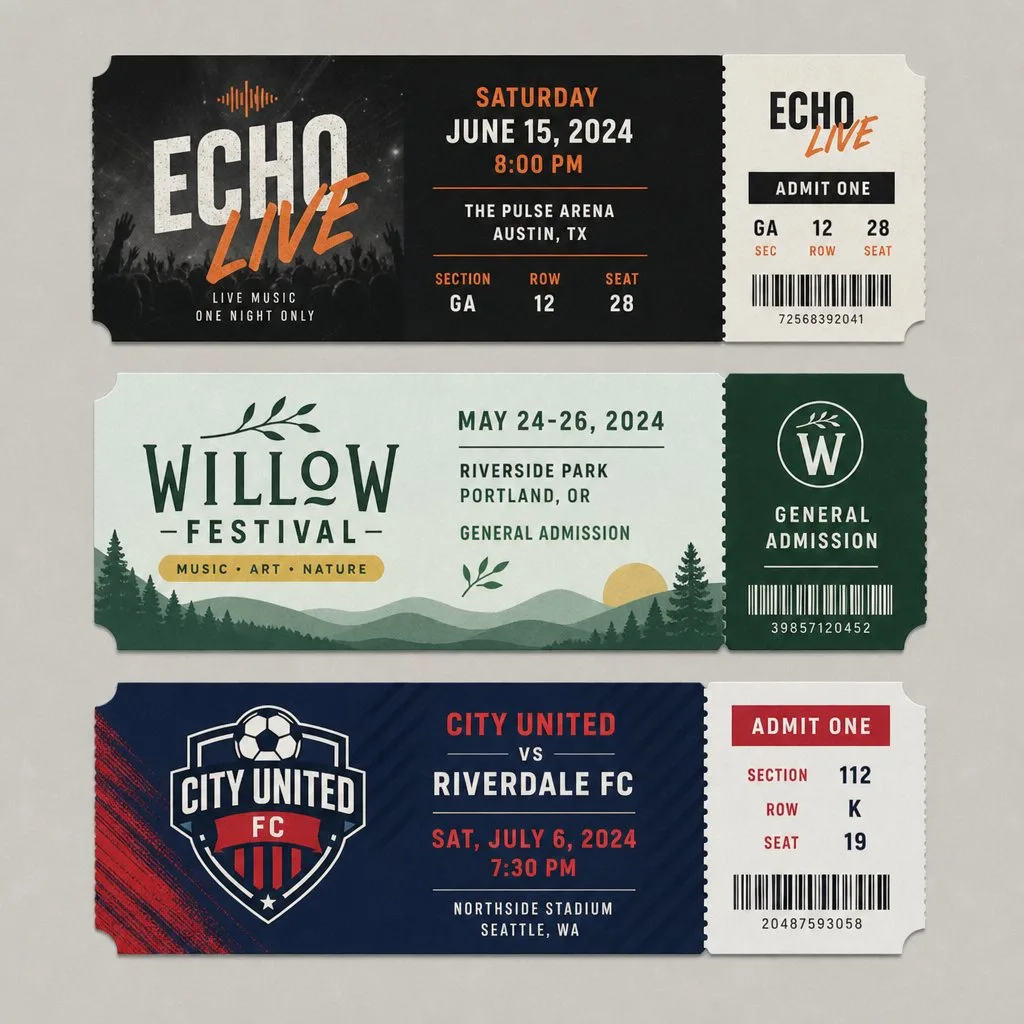
- A unique, scannable code. QR or PDF417. This is the ticket; the visual design is packaging.
- Holder identity. Name at minimum, so the code is tied to a person rather than floating free.
- Access scope. Which sessions, zones or days this ticket opens.
- The details that change. Venue, time, seat — the fields most likely to move after issue.
- A route back to you. Support contact, agenda link, or an offer on the back of the pass.
Where PDFs fall down
A PDF ticket is a picture. It can be forwarded, printed twice, and edited by anyone with basic tools. It cannot be updated after sending, so a room change means a second email and a hope that people read it. And it tells you nothing about who arrived.
A wallet pass fixes all four: it updates silently, it can be device-bound, it validates against the live record at the door, and every scan is recorded. We go deeper in electronic tickets explained.
Practical steps
- Define ticket types — general, VIP, staff, speaker, day pass. Each becomes a template variant.
- Decide the source of truth. If registrations already land in your CRM, issue from there rather than exporting to a ticketing tool.
- Design once for both wallets. Front for the glance, back for the detail, code for the door.
- Test the scan on the venue's actual network, with the actual device, before the day.
- Plan for walk-ins — a QR poster at the entrance that issues a ticket on the spot.
- Decide what happens after. The pass can become a thank-you, a feedback link, or next year's early-bird offer.

Pricing tiers and access control
Multiple tiers are a template problem, not a separate system. One design per tier, issued from the record that already knows which tier someone bought. If someone upgrades, switching their template updates the pass they are already holding — no reissue, no second email.
If your registrations live in Salesforce
Then the ticket should too. Kemicard issues from the Campaign Member or Contact record, delivers by one smart link, and writes the scan back. See event ticketing and the registration guide.
What a modern ticket has to carry
A ticket is no longer a receipt for entry — it is the last piece of brand a guest sees before they walk in, and the only channel you are guaranteed to reach them on during the event. That raises the bar on what belongs on it.
- A validated, not merely readable, code. Anything a scanner reads without checking a record is a photocopy waiting to happen.
- Tier and access rights on the face of it. General admission, VIP, crew, speaker — visible to staff at a glance, enforced by the scan.
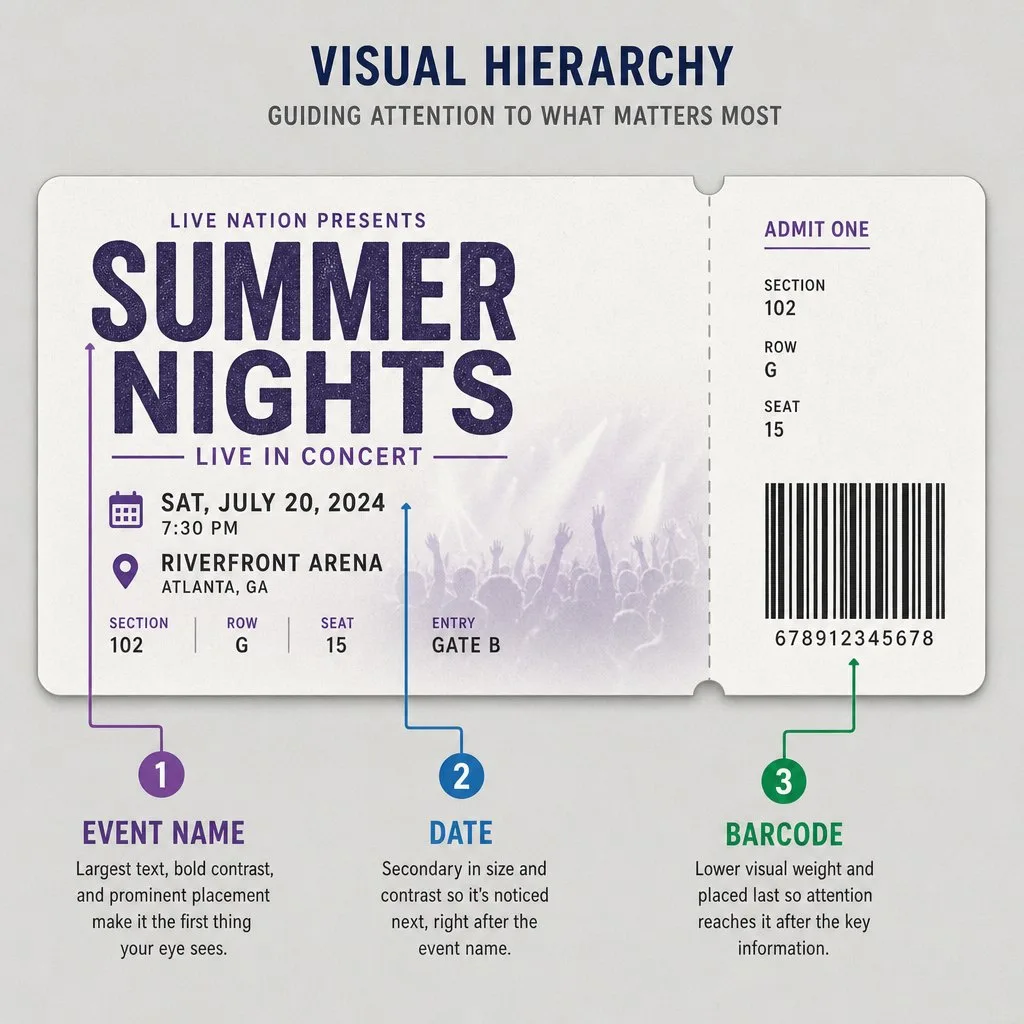
- Design that survives a phone screen. High contrast, one dominant field, and legible at arm's length in bad lighting.
- Personalisation. Name, seat, session, ticket holder — because a named ticket is far harder to resell than a generic one.
- A way to change it. Time changes, venue changes and upgrades happen; a ticket you cannot update becomes a support queue.
Security features worth the effort
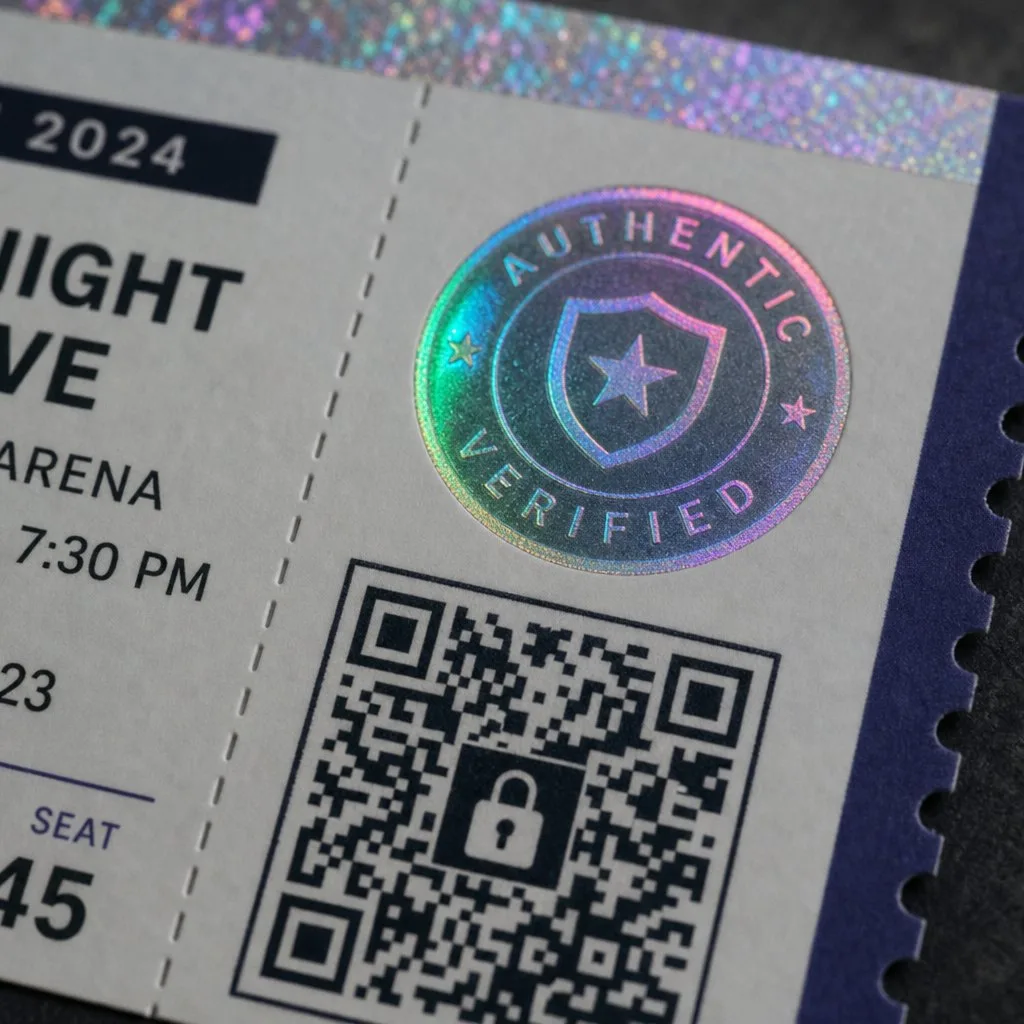
Ticket fraud is an economics problem: make duplication cost more than a ticket is worth and it stops. Rotating or single-use codes, validation against a live record, and per-recipient personalisation together do that without any of the theatre of holograms and watermarks.
Resale is the harder case. If your event has a genuine secondary-market problem, the answer is a pass you can revoke and reissue centrally — not a printed artefact you have lost control of the moment it leaves the printer.
The ticket as a channel
The most underused property of a wallet ticket is that it keeps working after it is issued. A schedule change reaches the lock screen. A queue update reaches everyone still outside. A thank-you and a survey reach people who actually attended, because you know who scanned.
That is the practical difference between a PDF and a pass, and it is worth more than the printing saved.
FAQ
- Can we still offer printed tickets? Yes — same barcode, so both scan identically at the door.
- What stops one ticket being used twice? Scan-time validation marks it used; the second attempt is refused.
- How late can we change the venue? Until the moment people arrive. The pass updates over push.
Explore Kemicard
Product & solutions
Build a Ticket From Your Own Event Record
Book a demo, test drive Kemicard, or start a free 30-day trial.
 Start Free Trial